
Blog
Unravel AIで実現、サステナビリティ業務 8割以上効率化 ー 世界最新サービス『Unravel データ収集エージェント』日本市場展開開始
〜 6週間かかったデータ収集が、1週間へ。Less Chasing. More Doing. 〜 催促の手間を削減し、本質的な脱炭素施策へ。人手不足に悩むサステナビリティ部門に、ついに本格AIが登場。
What Emissions Data Do You Need to Substantiate an Environmental Claim Under the New EU Rules?
To substantiate an environmental claim under the EU's new rules, you need product-level emissions data built from primary activity data and supplier-specific emission factors, calculated on a recognised method such as ISO 14067, and traceable from the claim on the label back to the records behind it. Spend-based estimates and company-wide averages do not meet that bar.
Announcements
Gartner® Cool Vendor™ Recognition
Unravel Carbon has been named in the Gartner® Cool Vendor™ Innovations in Supply Chain Sustainability report, 2026.
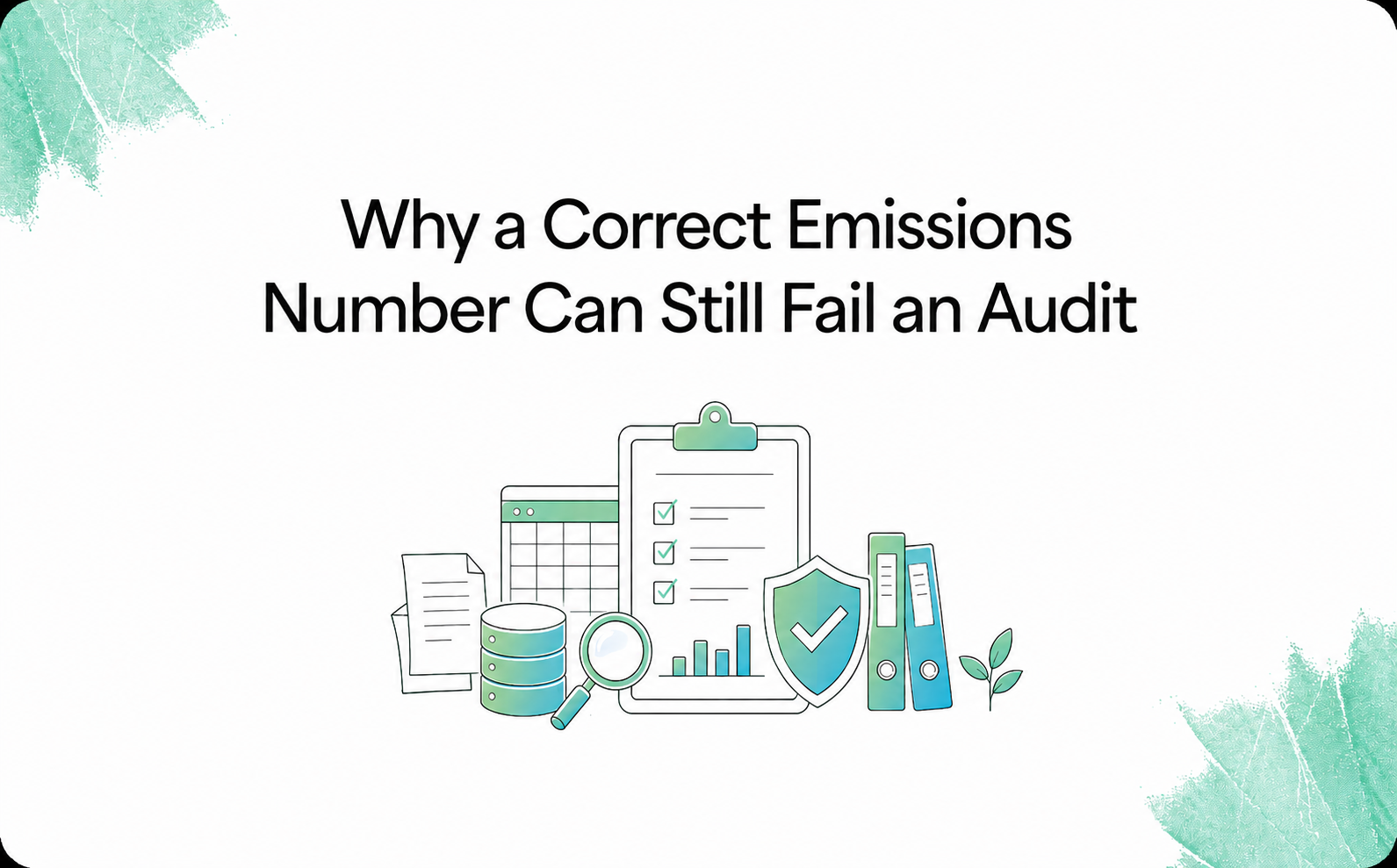
Why a Correct Emissions Number Can Still Fail an Audit
An emissions number can be completely accurate and still fail an audit, because assurance tests traceability, not just correctness. This article breaks down the evidence chain auditors actually ask for, when a spreadsheet genuinely is enough, and the three structural points where manual carbon accounting workflows lose the trail.
Announcements
Unravel AIで実現、サステナビリティ業務 8割以上効率化 ー 世界最新サービス『Unravel データ収集エージェント』日本市場展開開始
〜 6週間かかったデータ収集が、1週間へ。Less Chasing. More Doing. 〜 催促の手間を削減し、本質的な脱炭素施策へ。人手不足に悩むサステナビリティ部門に、ついに本格AIが登場。

Announcements
Unravel Carbon and ACS Announce Strategic Partnership to Accelerate Climate Action Across Asia-Pacific
The collaboration unites Unravel Carbon’s enterprise-grade emissions management and decarbonisation platform and AI Agents with ACS’s proven track record in sustainability delivery.
Insights
Product Carbon Footprint (PCF) Software: What It Is and How to Measure Product Emissions Accurately
Learn what a Product Carbon Footprint (PCF) is and how it measures emissions across a product’s lifecycle. Understand its role in credible climate action, compliance, and supply chain transparency.

Insights
How the ISSB Standards Impact Australian Companies
Learn about upcoming changes to disclosure frameworks within Australia, the importance of measuring Scope 3 emissions, and how Australian companies can prepare for the ISSB standards.

Announcements
Meet Unravel Carbon’s Improved Reporting Feature
Our improved reporting feature enables companies to make data-driven decisions by automatically generating beautiful and editable greenhouse gas emissions reports that provide actionable insights.

Inside Unravel Carbon
4 Takeaways From Our Participation at the Bloomberg Sustainable Business Summit
We spoke at the Bloomberg Sustainable Business Summit in Singapore, covering our work at Unravel Carbon, talent trends in climate tech, and the future of decarbonization in Asia-Pacific.

Insights
How Companies Can Create a Decarbonization Action Plan
Learn about different ways to lower emissions, the significance of granular data, and how companies can go about designing and implementing their decarbonization solutions.

Insights
Understanding the ISSB’s Standards: A Guide for Businesses Embracing Sustainability Reporting
Learn about the ISSB’s new standards, their potential impact on your company, and how to prepare for the 2024 reporting cycle.

Insights
How the Built Environment Sector Can Transition to Net Zero
Discover how the built environment plays a crucial role in achieving net zero, the importance of supply chains, and how both embodied and operational emissions can be reduced.